Which Battery Chainsaw Is Best for Home and Garden Use?
Picking a battery chainsaw for your yard shouldn’t feel like reading a technical manual. Walk into any hardware store, and you’ll find shelves stacked with specs nobody explains, and most reviews just restate the box. But here’s the thing: which battery chainsaw is best for home and garden use comes down to a handful of real-world factors, not marketing claims.
Here are 5 features that separate a chainsaw you’ll actually reach for from one that sits in the garage.
Battery Voltage and Runtime
Before choosing a cordless saw, it helps to understand how battery power affects both cutting strength and working time. The first thing to check is voltage, because it sets the ceiling on everything else the saw can do. For most home and garden jobs, an easy-to-use battery chainsaw in the 40V to 60V range can handle regular cutting tasks without the noise, fumes, or cord of a gas model. This makes it a practical choice for pruning, trimming branches, and handling light cleanup around the yard. It also gives homeowners more freedom to work in different areas without worrying about fuel, extension cords, or heavy equipment.
Bar Length and What It Tells You
Bar length is the most visible spec on any chainsaw, and it’s also the most misunderstood. The bar is the metal guide that the chain wraps around, and its length determines the diameter of wood you can cut in a single pass.
The Right Bar for Most Yards
A 14-inch to 16-inch bar handles everything a typical suburban or semi-rural yard throws at you. That covers branches up to 12 inches in diameter (you cut from both sides for anything thicker than half the bar length), standard firewood splitting, and light land clearing. Go shorter than 14 inches, and you’ll find yourself making multiple awkward passes on medium branches. Go longer than 18 inches, and the saw gets heavy fast.
Weight vs. Cutting Reach
Bar length adds weight, and weight adds fatigue. A 16-inch bar on a battery saw typically lands the total unit between 8 and 11 pounds. That’s manageable for an hour of ground-level work but tiring overhead. If you spend a lot of time pruning above shoulder height, a 12-inch bar on a lighter saw saves your arms more than the extra reach would help.
Bar and Chain Compatibility
Not all bars fit all saws. The bar attaches at the nose and the sprocket, and each manufacturer uses a specific mount pattern. Check that your model accepts aftermarket bars in the same gauge and pitch before you buy; you’ll want options when it’s time to replace a worn bar.
Chain Quality and Replacement Cost
The chain does the actual cutting, so its quality matters more than most buyers expect. A sharp, properly tensioned chain cuts fast and safely; a dull or loose one makes you push harder, and that’s where accidents start.
What Chain Pitch and Gauge Mean
Pitch refers to the spacing between chain links. The two most common options for home-use battery saws are 3/8-inch low profile and .325 inch. Low-profile chains are lighter and better suited to smaller bars and less powerful motors. A .325-inch pitch chain is more aggressive and pairs better with higher-voltage saws in the 40V to 60V range. Gauge is the thickness of the links that fit into the bar groove; mismatching gauge and bar leads to a chain that either falls off or jams.
How Often You’ll Need to Replace
A quality chain on a battery saw lasts 3 to 5 years with proper care (sharpen it regularly and don’t let it drag through dirt). Replacement chains for common bar sizes run $10 to $25 each, so this isn’t a deal-breaker. Just confirm that replacement chains are easy to find for your specific bar before you commit to a model.
Tensioning and Toolless Adjustment
Look for a saw with a toolless chain tensioner. Some entry-level models require a wrench and a screwdriver to adjust tension; that’s a chore nobody does consistently, which means loose chains and poor cuts. A side-access tensioner you can twist by hand means you’ll actually keep the chain at the right tension.
Safety Features Worth Checking
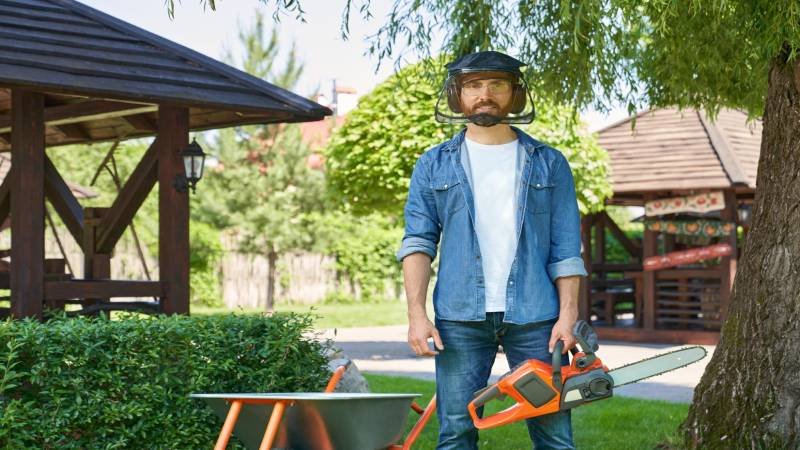
Battery chainsaws are quieter and lighter than gas models. The chain spins at the same speed, though. Safety features aren’t optional extras.
The most important one is the chain brake. It’s a hand guard at the front of the saw that stops the chain within milliseconds if the saw kicks back toward you. Every reputable battery-powered chainsaw sold in 2026 includes one, but confirm it on the spec sheet.
And look for a two-step start sequence too. You squeeze a trigger lock first, then the main trigger; this stops the saw from running if you accidentally grab it by the handle alone. A low kickback chain design (marked with “LK” on the packaging) is another feature worth prioritizing, since it reduces the chance of the bar snapping upward unexpectedly mid-cut.
Which Battery Chainsaw Is Best for Home and Garden Use Based on Brand Ecosystem
The best battery chainsaw for home and garden use isn’t always the one with the highest specs. It’s often the one that fits the battery platform you already own.
Most major tool manufacturers build battery systems where one battery works across drills, circular saws, leaf blowers, and chainsaws. If you already own a 40V battery and charger from a given brand, buying a chainsaw on the same platform means you don’t pay for an extra battery. That alone can save $60 to $100. The catch is that ecosystems lock you in; a 40V battery from one brand won’t fit a different brand’s saw, even if both say “40V.”
Starting fresh with no existing tools? Choose a platform with wide product coverage so future tool purchases stay compatible. Jono & Johno stocks parts and chains to fit a solid range of battery-powered models, which helps when you need a replacement chain or bar down the track without hunting across multiple suppliers.
Conclusion
Answering the question of which battery chainsaw is best for home and garden use means matching voltage and bar length to what your property actually demands, not buying the most powerful saw on the shelf. A 40V to 60V saw with a 14- to 16-inch bar, a quality chain, toolless tensioning, and a chain brake covers 95% of residential jobs cleanly and safely. Start with those five criteria, check battery-platform compatibility, and you’ll have a saw that earns its place in your tool shed. Click here to see more.