The Step-by-Step Process Behind Constructing a Modern Fuel Site
Why Fuel Site Development Requires Precision?
Building a modern fuel site is a complex, highly regulated process that demands coordination between engineers, environmental specialists, and construction professionals. Fuel systems must operate safely under intense daily use, handle high traffic volumes, and meet strict environmental and fire-safety standards. Because of this, businesses depend on the expertise of a gas station construction company that understands technical requirements, regulatory expectations, and the detailed sequencing needed to deliver a safe, efficient, and compliant site.
Phase One: Site Evaluation and Feasibility
Every project begins with a detailed evaluation of the proposed site. Teams assess soil conditions, groundwater depth, utility access, zoning regulations, and traffic flow. This determines whether the location is suitable for tanks, fuel systems, and high-volume vehicle movement. A professional gas station construction company reviews environmental restrictions, identifies grading or drainage needs, and ensures the site can support long-term operational demands. This early phase prevents costly issues later in the build.
Phase Two: Permits, Approvals, and Compliance
Fuel sites face some of the strictest regulations in commercial construction. Developers must secure approvals related to environmental protection, fire codes, underground tank installation, stormwater management, and waste handling. These requirements vary by region, making compliance a major component of project planning. With multiple agencies involved, a gas station construction company handles documentation, coordinates inspections, and ensures every step aligns with regulatory expectations. Proper permitting keeps the project on schedule and prevents legal or operational delays.
Phase Three: Site Preparation and Earthwork
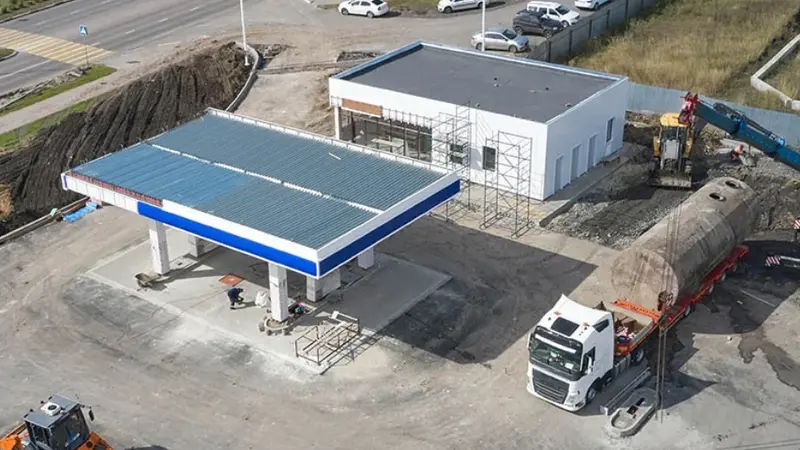
Once approvals are in place, the physical work begins. Crews clear the land, grade the property for proper drainage, and establish access routes for heavy equipment. Foundations are shaped for canopies, fueling islands, and convenience structures. Underground storage tank (UST) areas are excavated with precise measurements to maintain safety and stability. Soil compaction, erosion control, and utility trenching all occur in this stage. Strong site preparation sets the foundation for every component that follows.
Phase Four: Tank Installation and Fuel System Setup
Underground storage tanks are placed into excavated areas using engineered lifting equipment. Tanks are anchored, backfilled in controlled layers, and connected to piping systems that will transport fuel from storage to dispensers. Leak detection systems, monitoring sensors, and spill containment features are installed at this time to ensure operational safety. Fuel lines are pressure-tested and verified before being covered. This entire stage must meet strict safety and environmental requirements to protect the site for decades of operation.
Phase Five: Building the Fueling Infrastructure
With the tanks in place, teams construct the fueling islands, dispensers, and protective bollards. Electrical systems, emergency shutoffs, lighting, and point-of-sale connections are installed. Canopies are erected to provide coverage from the weather and improve customer flow. Dispensers receive final calibration and inspection before activation. By this stage, the core functionality of the fuel site begins to take shape, supported by careful design and coordinated construction.
Phase Six: Constructing the Store and Service Areas
If the fuel site includes a convenience store or service facility, crews build the main structure alongside the fueling area. This involves foundation work, framing, insulation, HVAC installation, plumbing, shelving, and interior finishing. Parking areas, walkways, signage, and landscaping are developed simultaneously. The exterior layout is designed to create efficient traffic movement, safe pedestrian access, and a clean customer experience. These elements transform the site from a construction zone into a commercial-ready property.
Phase Seven: Final Testing, Inspections, and Certification
Before a fuel site can open, every system undergoes rigorous testing. Tanks and piping are pressure-checked, dispensers calibrated, electrical systems inspected, fire-suppression tools verified, and monitoring systems tested for accuracy. Health, fire, environmental, and building inspectors review the entire site to certify compliance. This step ensures that all infrastructure meets required safety and performance standards.
Phase Eight: Operational Setup and Training
Once certified, the facility prepares for operation. Staff are trained on safety protocols, emergency procedures, fuel handling, and equipment use. Fuel deliveries begin, inventory systems are activated, and operational checklists are completed. The site transitions from construction to full readiness, supported by detailed documentation and a final handover.
Why Professional Expertise Defines the Success of a Fuel Site?
Constructing a modern fuel site requires far more than basic commercial construction. It involves environmental engineering, specialized fuel-system installation, precise safety controls, and coordination across multiple trades. A skilled gas station construction company ensures that every phase from excavation to final certification is completed safely, efficiently, and in full compliance with industry standards. Their expertise protects the property owner, the environment, and the long-term reliability of the site.
Modern fuel sites succeed because they’re built with careful planning, proven methods, and the expert guidance of teams who understand every inch of the process.