How to Build a Daily Hydration Habit That Sticks: The Case for Flavored Electrolyte Packs Over Plain Water
Habits are built on reward. Not discipline, not willpower, not knowing you should – reward. When a behavior produces a reliable sensory or experiential payoff, the brain encodes it as worth repeating, and repetition over time hardens into habit. This is why the most successful wellness habits are ones that feel good in the moment, not just ones that are good for you in the long run. Understanding this principle changes how you should approach building a daily hydration habit – and it explains exactly why a raspberry electrolyte hydration pack is more effective as a habit-building tool than an equivalent volume of plain water.
This is not about lowering standards for what hydration should deliver. It is about understanding that the habit that gets built and maintained is the one that produces results – and a flavorful, functionally superior drink that you actually look forward to builds a habit far more reliably than a behavioral prescription built purely on obligation.
Why Most Hydration Habits Fail
Most people who set hydration goals fail to maintain them consistently, and the reason is almost always the same: the habit has no intrinsic reward. Drinking plain water to hit an arbitrary daily volume target is purely discipline-dependent. There is nothing about the experience that your brain flags as genuinely pleasurable. The motivation exists only at the level of conscious reasoning – ‘I should drink more water because it is healthy’ – which is one of the least durable forms of motivation available.
Compare this to any habit that has successfully integrated into your daily life. Morning coffee is not just about caffeine – it is about warmth, aroma, ritual, and a flavor experience that is genuinely anticipated. Regular exercise that sticks is usually associated with a form of movement that produces a felt reward – the runner’s calm, the lifting high, the social satisfaction of a team sport. The behavior is sustained because it produces something the brain wants to repeat, not just because it is logically beneficial.
To build a lasting hydration habit, you need to apply the same principle: make the experience of drinking enough genuinely rewarding. Flavored electrolyte packs are the most practical tool available for doing this.
The Three Elements of a Habit That Sticks
Behavioral science identifies three core components of habit formation: a cue that triggers the behavior, a routine (the behavior itself), and a reward that reinforces its repetition. Building a daily hydration habit requires deliberately designing all three elements rather than leaving them to chance.
The cue can be any consistent trigger in your existing daily routine: waking up, finishing your morning shower, sitting down at your desk, finishing a workout, or returning home in the evening. Pairing your hydration pack with an existing anchor behavior dramatically increases the reliability of the cue. The simpler and more concrete the cue, the better – ‘every morning when I sit at my desk’ is more reliable than ‘sometime in the morning when I remember.’
The routine is the actual drinking – preparing a serving of your raspberry electrolyte mix and consuming it during or immediately after the cue activity. The pack format makes this routine frictionless: no measuring, no preparation, no special equipment. Open a pack, pour into a water bottle or glass, add water. The less effort required for the routine, the more likely it is to survive the moments when motivation is low.
The reward is where the flavored electrolyte pack earns its place in the habit architecture. A genuinely pleasant flavor experience provides the immediate sensory reward that plain water cannot. Your brain receives a positive signal at the moment of the behavior – a raspberry taste that is refreshing and satisfying – and begins to associate the cue and the routine with that reward. Over repetitions, the cue itself begins to generate anticipation of the reward, and the habit becomes self-sustaining.
Implementation Intentions: Specificity That Drives Follow-Through
Research on habit formation consistently shows that implementation intentions – specific ‘when-then’ plans rather than general goals – dramatically improve follow-through rates. ‘I will drink more water’ is a general goal. ‘When I sit at my desk each morning, I will mix a raspberry electrolyte pack into my water bottle and finish it before my first meeting’ is an implementation intention.
The specificity of when, where, and what eliminates the decision-making overhead that general goals require. You are not asking yourself each morning whether, when, and how to hydrate – the decision has already been made and encoded as a plan. This matters because decision fatigue is real: every behavioral decision requires a small expenditure of cognitive resources, and removing the decision from the equation by having a pre-committed plan reduces friction to nearly zero.
Combining an implementation intention with a product that provides genuine sensory reward – your raspberry electrolyte pack – creates a habit structure that is about as close to automatic as voluntary behaviors get. The cue fires, the plan activates, the routine executes, the reward lands, and the next repetition becomes slightly more likely than the one before it.
Stacking Hydration onto Existing Routines
Habit stacking – attaching a new behavior to an existing, established one – is one of the most effective strategies in behavioral habit design. Because existing habits are already automatic (they fire without conscious decision), attaching a new behavior to them borrows some of that automaticity. The key is to identify reliable anchor habits and make your hydration routine an immediate consequence of them.
Morning coffee is perhaps the most reliable anchor for the first hydration serving of the day. Many people make coffee habitually and automatically – which makes it a perfect trigger. The practice of preparing and drinking a raspberry electrolyte pack simultaneously with or immediately following morning coffee replenishes fluid and electrolytes that the coffee’s mild diuretic effect removes, and the pairing creates a strong associative link between the morning coffee ritual and the hydration behavior.
Other effective anchor habits for hydration stacking: immediately after brushing teeth (morning and evening), immediately after any workout or physical activity, immediately upon sitting at a desk at work, and before any meal. Each of these existing behaviors creates a reliable cue that can trigger the hydration routine with minimal additional decision-making.
Tracking Progress Without Obsessing
Tracking is a useful tool in habit formation when used proportionately. Counting servings, marking a simple habit tracker, or noting in a journal that you hit your hydration goal provides positive reinforcement that supplements the sensory reward of the drink itself. The visual record of a streak or a consistently completed tracker creates its own motivational force – the ‘don’t break the chain’ effect that many successful habit builders rely on.
The risk of tracking is that it can become its own source of stress if missed days feel like failures rather than normal variation. A more resilient approach is to track hydration as one of several daily wellness behaviors rather than as an isolated goal, and to treat occasional off days as data rather than failure. The goal is a sustainable long-term habit, not a perfect record – and sustainable habits survive imperfect execution far better than rigid targets do.
When the Habit Is Built: Maintenance Without Monotony
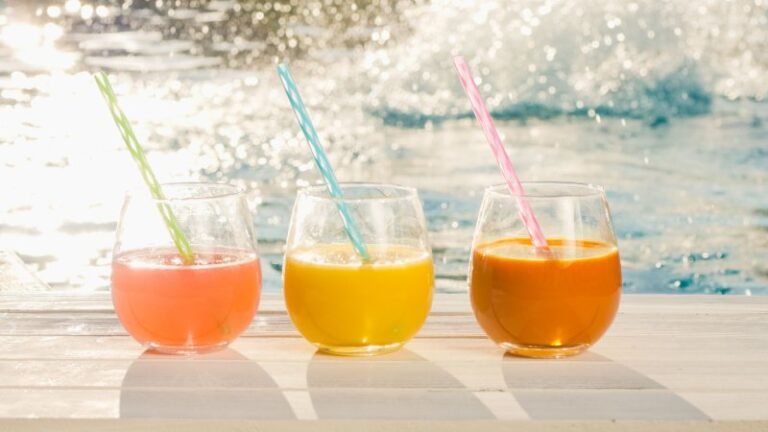
Once people establish a daily hydration habit—typically after 21 to 66 days of consistent practice, depending on individual variability—the behavioral challenge shifts from building consistency to maintaining it without boredom. This is where flavor variety becomes the long-term sustainability strategy. Rotating between raspberry, watermelon, and orange flavors across the week prevents the sensory fatigue that causes even well-established habits to erode over time.
Keeping different flavors in different locations also reinforces the habit across contexts: raspberry at the home desk, orange in the gym bag, watermelon at the office. Context-specific habit cues are particularly durable because the physical environment itself becomes part of the trigger. When you sit at your home desk, the raspberry pack is there. When you arrive at the gym, the orange pack is in your bag. The habit fires without requiring a conscious decision across all the contexts of your daily life.
Frequently Asked Questions
How long does it take to build a daily hydration habit?
Research on habit formation suggests an average of 66 days for a new behavior to become automatic, though this varies considerably between individuals and behaviors. Simpler behaviors with clear cues and strong rewards form faster. Using a flavored electrolyte pack – which provides an immediate sensory reward – accelerates this timeline compared to building a plain water habit, because the reward signal is stronger and more immediate.
How many servings of electrolyte pack should I aim for per day?
One to two servings per day is a practical and effective range for most active adults. A morning serving as a daily hydration foundation and an additional serving around exercise or during the afternoon energy dip covers most daily electrolyte replacement needs. On very active days or in hot weather, a third serving may be appropriate based on how much you are sweating.
Is it okay to drink raspberry electrolyte packs every day long term?
Yes—manufacturers design clean electrolyte products without stimulants, excess sugar, or artificial additives for daily long-term use.The electrolyte content replaces what normal daily physiological processes and activity deplete, and consistent daily use produces the best hydration outcomes. Healthy kidneys manage daily electrolyte intake efficiently across the ranges provided by standard electrolyte products.
What if I do not like the taste of electrolyte drinks?
Taste preferences vary, and finding the right flavor often requires trying more than one option. Raspberry, watermelon, and orange all have distinct flavor profiles that appeal to different palates. Starting with whichever fruit flavor you generally enjoy most is a practical approach. Mixing concentration also affects palatability – some people prefer a more diluted mix (more water per pack) for a lighter flavor, particularly as they are building the habit
Can electrolyte packs replace plain water entirely?
Electrolyte-enhanced water serves the same hydration function as plain water with added mineral benefits—it does not need rationing, and people do not need to treat it differently from plain water.However, most people find that electrolyte packs work best as part of a hydration routine that also includes plain water, particularly for very large fluid intake volumes. Using electrolyte packs for one to two servings daily and plain water for the remainder is the most common and practical approach.
For those building a daily hydration habit that actually lasts, Dialed Moods offers the Raspberry Roulette Electrolyte Hydration Pack alongside orange and watermelon options – a full-flavor functional hydration range designed to make consistent daily hydration the easiest wellness habit you have ever built.