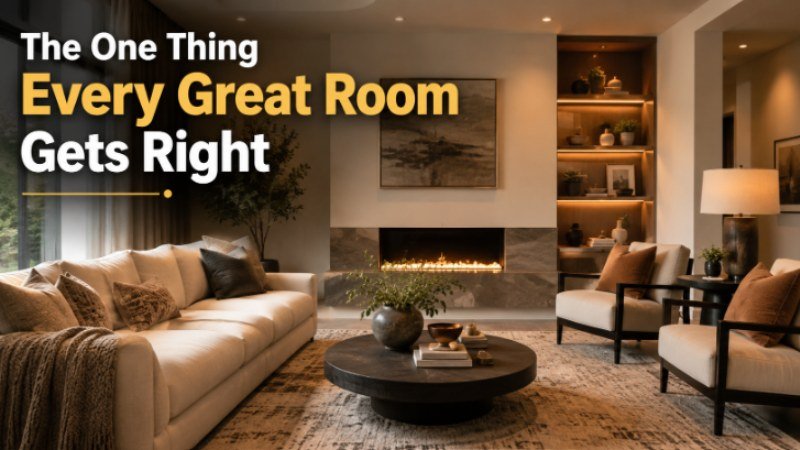
The One Thing Every Great Room Gets Right
Ask ten interior designers what the most important element is, and most will say lighting. Lighting shapes how colors read, how large a room feels, and how people emotionally respond to a space. Get the lighting right, and everything else falls into place. Get it wrong, and no amount of expensive furniture will save you.
Walk into a beautifully designed room and something happens before you even notice the furniture. There’s a warmth, a sense of ease—or, in the wrong room, a vague unease you can’t quite name. That invisible force is almost always lighting. While choosing the perfect Rugs Canada homeowners love can enhance comfort and style, lighting is what truly brings every design element to life. Color, proportion, balance, layout, and the right area rug all matter deeply in interior design, but lighting determines how every decision is seen and experienced.
This post makes the case for lighting as the most important thing in interior design. It also covers the other key principles you need to understand — proportion, balance, flow, and focal points — because great rooms are rarely the result of getting one thing right. They come from getting many things right, with lighting as the foundation.
Why do professional interior designers say lighting is the most important element?
Lighting specialists at John Cullen Lighting describe it this way: great lighting creates depth and height, cozy spots, and draws the eye toward a room’s most impressive features. That’s not a small claim. It means lighting controls where you look, how big a space feels, and what mood you carry when you leave.
The psychological dimension is significant. According to research published in the International Journal of Environmental Research and Public Health, most people have measurable psychological responses to their indoor environments. Lighting sits at the center of those responses. A room flooded with warm, layered light feels welcoming. A room with a single overhead fixture casting flat light feels institutional — even if every other design decision was thoughtful.
Marymount University’s interior architecture program frames it clearly: the availability of natural light directly impacts the mood and atmosphere of a room, and when natural light is limited, architectural lighting solutions must compensate.
This is why professional designers plan lighting before selecting furniture, wall colors, or textiles. Change the lighting and you change the room. The same sofa in the same position reads entirely differently under warm pendant lighting versus cold overhead fluorescents.
How does lighting affect the perception of space and color?
Color is not fixed. It shifts depending on the light source, the intensity, and the time of day. This is why interior designers always test paint samples on the actual wall, in the room where they’ll be used — not under the lighting at the hardware store.
A rich navy blue under warm incandescent light reads as moody and intimate. Under cool daylight, that same blue can feel stark or cold. Neutral tones, which most designers rely on as foundational palette choices, are especially sensitive to light — what looks like a warm greige at noon can shift to lavender by evening under artificial light.
Beyond color, lighting shapes the perceived scale of a room. Uplighting draws the eye upward and makes ceilings feel taller. Accent lighting focused on a far wall adds apparent depth. Low, directional lighting pools attention in specific areas, making large open spaces feel more human in scale. These are not tricks — they are fundamental design tools.
What role does natural light play in interior design?
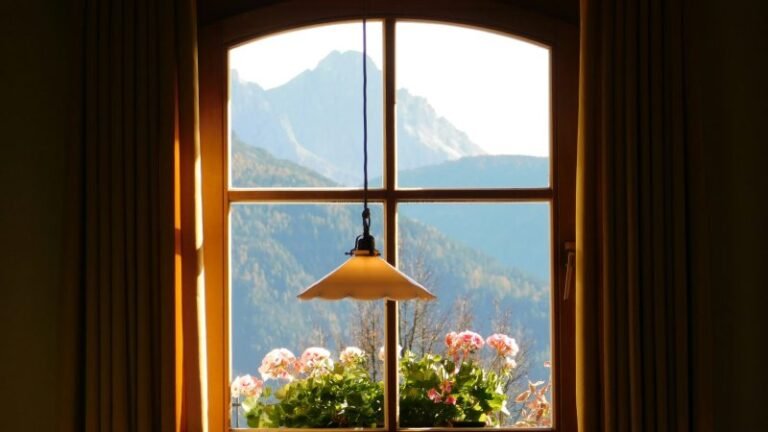
Natural light is the gold standard, and designing a room around it is one of the clearest markers of a skilled designer. The direction a room faces determines the quality and color temperature of the natural light it receives throughout the day — a consideration that should influence paint colors, fabric choices, and furniture placement.
Curtain placement is closely tied to this. Hanging rods close to the ceiling and extending them beyond the window frame allows drapes to frame the window without blocking light when open. This creates the impression of a larger window and brings more natural light into the room — a straightforward technique with a significant visual impact.
Biophilic design, which involves incorporating natural elements into interior spaces, is gaining traction precisely because of how strongly people respond to natural light and organic materials. Research cited in Architectural Digest shows that people tend to want to spend more time in rooms with biophilic elements — natural light being chief among them.
How do you layer lighting to transform a room?
Layered lighting means building a scheme from multiple light sources at different heights and with different purposes. Most designers work with three categories:
- Ambient lighting — the base layer, providing overall illumination (ceiling fixtures, recessed lights, natural light)
- Task lighting — focused light for specific activities (reading lamps, under-cabinet kitchen lights, desk lamps)
- Accent lighting — directional light used to highlight architectural features, artwork, or focal points
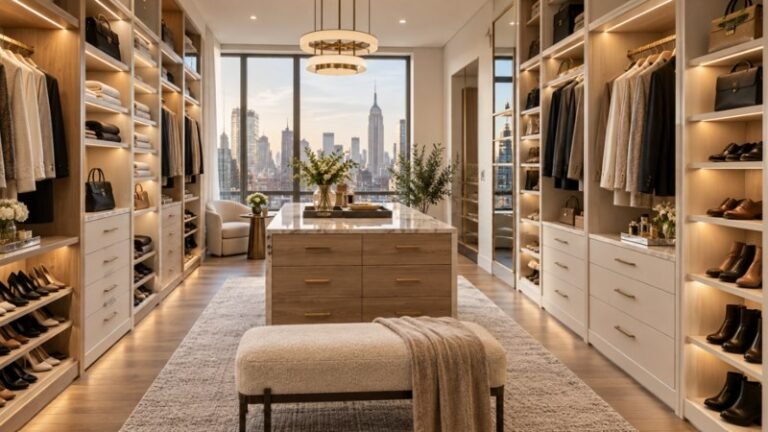
A common mistake in residential spaces is relying entirely on ambient lighting — usually a single ceiling fixture — and wondering why a well-furnished room still feels flat. Adding a floor lamp, a pair of table lamps, or directional wall sconces immediately adds warmth, dimension, and a sense of intention.
Dimmer switches are among the most cost-effective tools in interior design. The ability to shift a room from energized to calm without changing a single piece of furniture is genuinely transformative.
What other principles are essential to interior design?
Lighting may be the most important element, but it doesn’t operate alone. The following principles work in concert with it:
Scale and proportion. Furniture that is too small for a room looks lost; furniture that is too large feels oppressive. Scale refers to the size of objects relative to the space; proportion refers to how objects relate to each other. Both are critical to visual harmony.
Visual balance. Balance doesn’t require symmetry. Asymmetrical arrangements can feel just as stable as mirrored ones, as long as the visual weight is distributed thoughtfully across the room. Think of it as a see-saw — equal visual weight on both sides, even if the objects are entirely different.
Focal point. Every room benefits from a clear focal point — an element the eye moves toward naturally. This might be a fireplace, a large piece of art, a dramatic window, or a statement wall. Furniture placement should support this focal point, not compete with or obscure it.
Flow and spatial layout. According to Marymount University’s interior architecture program, the placement of furniture and design elements determines how a person feels when they enter a room. Good flow means moving through a space without obstruction, and the layout should support the room’s intended purpose.
Materials and texture. Research published in the International Journal of Environmental Research and Public Health found that materials such as glass and wood are better suited to restorative spaces, while metal is not recommended for rooms intended to feel calm and peaceful. Material choices carry more psychological weight than most homeowners realize.
How can you apply these interior design principles in your own home?
You don’t need to redesign a room from scratch to make meaningful improvements. Start here:
- Audit your lighting. Walk through each room and identify where the light falls flat. Add a floor lamp, swap in warmer bulbs, or install a dimmer switch.
- Find your focal point. If a room lacks a natural anchor, create one. Oversized artwork, a gallery wall, or a statement piece of furniture can serve this role.
- Check your rug size. A rug that is too small is one of the most common design mistakes. In a living room, all furniture legs — or at minimum the front legs — should sit on the rug.
- Test paint colors in context. Always sample paint on the wall in the room you’re painting, and observe it at different times of day.
- Bring in natural materials. Even small additions — a wooden tray, linen cushion covers, a terracotta pot — add warmth and texture that synthetic materials rarely replicate.
Start with the light, build from there
The most important thing in interior design is lighting — not because other principles don’t matter, but because lighting is the lens through which every other decision is perceived. Proportion, balance, material choice, and color all depend on light to communicate what the designer intended.
Understanding this shifts the way you approach any room. Before choosing a sofa or a paint color, ask: how will this be lit? That single question will save considerable time, money, and second-guessing.
Frequently Asked Questions
What is the most important element in interior design?
Most professional designers identify lighting as the single most important element in interior design. Lighting shapes how colors appear, how large a space feels, and how people emotionally experience a room. Without thoughtful lighting, even well-chosen furniture and finishes will underperform.
What is layered lighting in interior design?
Layered lighting refers to building a room’s illumination from multiple sources at different heights and with different purposes: ambient lighting for overall brightness, task lighting for specific activities, and accent lighting to highlight architectural features or focal points. Layering creates warmth, depth, and flexibility.
How does natural light affect interior design choices?
Natural light determines the color temperature and intensity of light in a room throughout the day, which directly influences how paint colors, fabrics, and materials read. Designers factor in the direction a room faces when selecting colors and window treatments, and prioritize maximizing natural light wherever possible.
What is visual balance in interior design?
Visual balance refers to the distribution of visual weight across a room. A balanced room doesn’t need to be symmetrical — asymmetrical arrangements can feel equally stable as long as the perceived weight of furniture, color, and objects is evenly distributed on both sides of a space.
What is biophilic design and why does it matter?
Biophilic design incorporates natural elements — natural light, wood, plants, water features, organic textures — into interior spaces. Research cited in Architectural Digest shows that people tend to want to spend more time in rooms with biophilic elements than in those without them, making it one of the more well-supported approaches in contemporary interior design.
Where should you start when designing a room from scratch?
Most professional designers recommend starting with the rug, as it establishes the color palette and anchors the furniture arrangement. From there, select major furniture pieces, then work toward smaller elements like lamps, artwork, and accessories. Paint color is typically chosen last, since it is far easier to match paint to a rug than the reverse.