Essential Items Every Household Should Keep in an Emergency Kit
Having an emergency kit prepared and stocked can mean the difference between a bad weekend and a disaster.
Every home should have one. Most homes will not find one when they need it. New study shows only 5% of homes have a fully stocked emergency supply kit and 20% of homes have no supplies whatsoever. That’s terrifying considering most disasters give you very little time to prepare.
The good news?
Assembling the right kit is simpler (& more affordable) than most realize. With proper materials readily available, any household can weather anything from a blackout to a devastating flood calmly.
What you’ll discover:
- Why Emergency Kits Matter More Than Ever
- The Must-Have Items For Every Household Kit
- Water and Food Essentials
- First Aid and Medical Supplies
- Tools, Tech, and Safety Gear
- Documents and Personal Items
- How To Keep Your Kit Fresh
Why Emergency Kits Matter More Than Ever?
Natural disasters continue to increase in severity every year. Floods make up approximately 90% of natural disasters declared in the United States by Federal governments.
And here’s the kicker…
Water damage is more than ruined floors and furniture. Should wet materials remain moist for more than 24-48 hours mold growth is likely. This is why every emergency kit should contain tools for after the disaster strikes too.
Professional flood and water damage restoration teams take care of major mold remediation after a flood. However, the actions you take in the first few hours before help arrives are crucial. Equipping your kit with plastic sheeting, N95 masks, and protective gear can give you a huge advantage in preventing mold remediation issues.
Think of your emergency kit as your first line of defense.
The Must-Have Items For Every Household Kit
There are 5x core categories every emergency kit should cover:
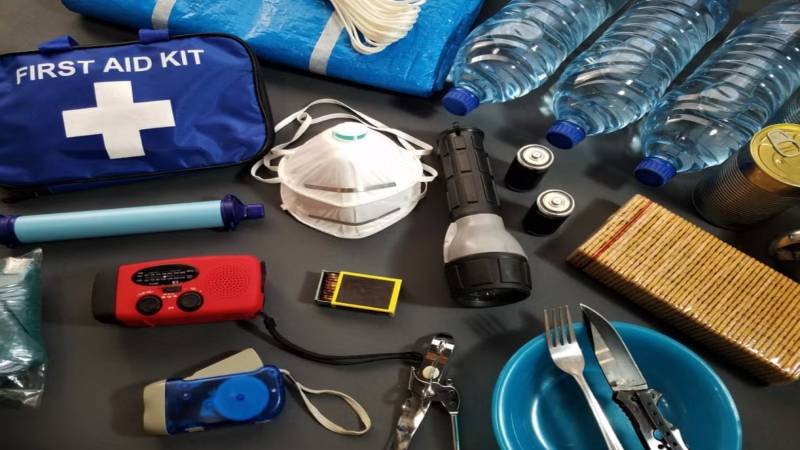
- Water and food
- First aid and medications
- Tools and safety gear
- Communication and lighting
- Important documents
Skip one of these at your peril. Here’s what each one is and why you need it.
Water and Food Essentials
This is where everyone should start.
There are various numbers tossed around but the standard formula is One gallon of water per person per day for at least 3 days. So for a family of four you want at least 12 gallons. However many recommend provisioning for 2 weeks if you have the room and money to do so.
Your food supply should include:
- Non-perishable canned goods
- High-energy bars and dried fruits
- Peanut butter (great calories, long shelf life)
- Crackers and other shelf-stable snacks
- A manual can opener (most people forget this one)
- Special items for infants, elderly, or pets
Stay away from food that requires cooking or refrigeration. You want food that will be safe to eat right out of the can if power is out for days.
First Aid and Medical Supplies
A basic first aid kit isn’t enough on its own.
You want a kit with supplies for anything from minor cuts to major trauma. Pre-pack assembled kits are great bases, but you’ll almost always want to add to them.
Make sure your first aid kit has:
- Bandages in multiple sizes
- Antiseptic wipes and ointments
- Pain relievers and fever reducers
- Prescription medications (rotate every 6 months)
- A digital thermometer
- Tweezers and scissors
- N95 masks for dust and mold spore exposure
That last one is key. Flooded or water-damaged homes are filled with spores and other irritants. N95 masks will protect your lungs while surveying damage and waiting for assistance.
Tools, Tech, and Safety Gear You Can’t Skip
Water intrusion in your home is stressful. Having the proper tools can help you prevent further damage until help arrives.
Your kit should include:
- A heavy-duty flashlight (LED preferred)
- Extra batteries in multiple sizes
- A multi-tool or basic toolset
- Plastic sheeting and duct tape
- Work gloves (multiple pairs)
- A wrench to turn off gas and water mains
- A battery-powered or hand-crank radio
Plastic sheeting and duct tape can be used for two purposes. They can seal off contaminated rooms to prevent the spread of mold. They can also be used to cover broken windows during a storm.
Don’t assume your cell phone will always have information. Cell towers can remain disabled for days or longer following a large-scale event. NOAA weather radio is an inexpensive purchase that will serve you well when the time comes.
Documents and Personal Items
Here’s something most people overlook…
If you have to evacuate quickly, you will want fast access to certain documents. Store copies in a waterproof bag in your kit.
Include:
- Copies of IDs, passports, and birth certificates
- Insurance policies and contact numbers
- Bank account information
- Photos of your home (for insurance claims)
- Some cash in small bills
In case of a flood, if you have damage that you need to file claims on for repairs, having documents on hand will save you days of dealing with insurance companies.
How To Keep Your Kit Fresh
A kit gathering dust in your closet for 5x years isn’t going to be of much use to you when you need it.
You need to check and refresh it regularly:
- Every 6 months: Test batteries and replace expired food
- Every year: Update documents and prescriptions
- After any use: Restock what you used right away
Put a reminder on your phone. Add it to your daylight savings reminders so you don’t forget.
Why does this matter?
98% of basements will deal with water damage at some point in time. That’s NOT a maybe. That’s something that is almost guaranteed to happen to your home if you have a basement. Being prepared means having supplies that will work when you go to use them.
The Bottom Line
A quality emergency kit should give you and your family peace of mind.
Whether it’s a blackout, blizzard or major flooding that will require professional remediation, being prepared with these essentials is the difference between managing an emergency and letting it manage you.
To quickly recap:
- Build your kit around 5x core categories
- Store at least 3 days of water and food per person
- Include first aid supplies, tools, and safety gear
- Keep important documents in a waterproof bag
- Check and refresh your kit every 6 months
Don’t wait until there’s a storm advisory flashed across your TV screen. Build your disaster supply kit this week and sleep soundly that your family will be ready for whatever happens. Click here see more.