Signs Your Heat Pump Needs Repair Before Phoenix Winter Arrives
Phoenix winters can catch homeowners off guard. Overnight temperatures in December and January regularly dip into the 30s and 40s, and a heat pump that struggled through a summer of 110-degree heat may not be ready to switch roles without warning. That is exactly why heat pump repair in Phoenix tends to spike right as the first cold front rolls through. Catching the warning signs early can mean the difference between a quick fix and a full system failure on the coldest night of the year. Penguin Air, Plumbing & Electrical has been serving Phoenix Valley homeowners since 2011 and holds a BBB A+ Rating.
Your heat pump spent roughly five months in cooling mode. Switching to heat requires the reversing valve to change refrigerant flow direction, and the defrost board and auxiliary heat strips only engage during the heating season. None of those parts got a workout all summer, so the first cold snap is effectively their first test in months.
Five Heat Pump Warning Signs to Check Before Phoenix Winter
Run through these five signs on a cool evening in October or early November. Each one is something you can check yourself, and any of them warrants a diagnostic call before temperatures fall further.
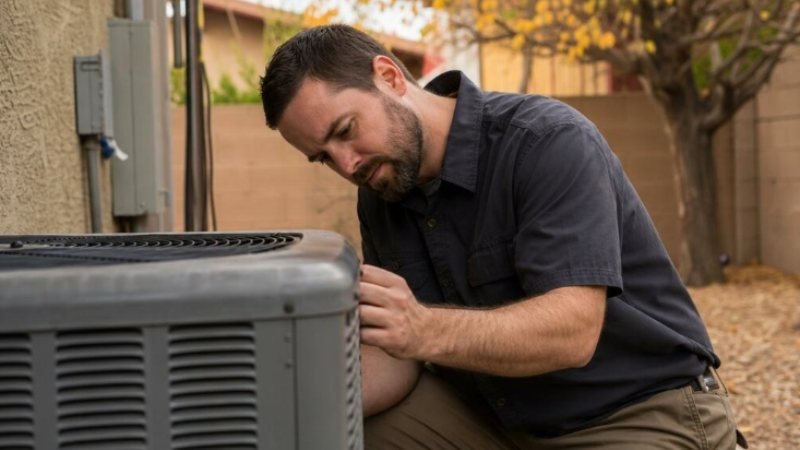
- Unusual noises from the outdoor unit: A healthy heat pump hums steadily. Grinding or banging points to a failing compressor or loose fan blade. Shut the unit off immediately. Squealing signals a worn blower belt or motor bearing. Repeated clicking on startup usually means a failing capacitor, one of the most common Phoenix failures after a long cooling season.
- Longer run times that never reach the set temperature: Some extended cycling is normal in heating mode, but if the system runs for hours and the house still feels cool, suspect low refrigerant, dirty coils, or a stuck reversing valve.
- Rising utility bills before the cold sets in: APS and SRP customers can review month-over-month usage online for free. A jump in your October or November bill, before heating demand really climbs, often means the system is straining harder than it should.
- Ice or frost on the outdoor coil: A working defrost cycle clears light frost on its own. Persistent ice means the defrost board or sensor has failed, forcing the unit to work against a frozen surface and risking compressor damage.
- Weak or lukewarm airflow from the vents: Supply vents in heating mode should feel distinctly warm. Weak airflow points to a clogged filter or failing blower motor; lukewarm air often means the reversing valve is not fully switching or refrigerant is low.
Why Fall Is the Right Time to Check Your Heat Pump in Phoenix
 How Phoenix’s Climate Puts Unique Demands on Heat Pumps
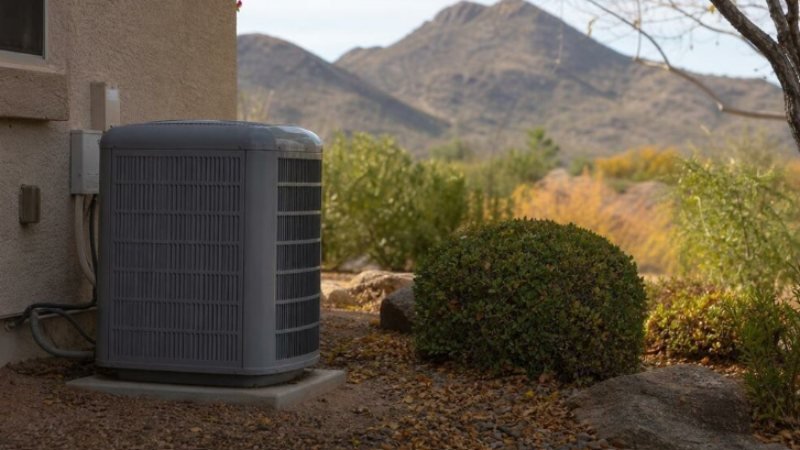
From June through September, outdoor temps regularly push past 110°F, stressing capacitors, refrigerant lines, and condenser coils for months before the system ever switches to heating. Components that are already marginal in September are the ones that quit in December. Low humidity and alkaline desert air also accelerate corrosion on outdoor coil fins and refrigerant line connections, while wind-blown dust and caliche grit pack between the fins and trap corrosion against the metal. A fall inspection catches it early; left alone, it can become a refrigerant leak right when heat is needed most.
What Happens When You Wait Until It’s Already Cold
The first overnight temps below 50°F hit the Phoenix metro fast, usually in November. Scheduling a visit in October typically means better availability and standard pricing, while waiting until December often means emergency rates and longer lead times.
Frequently Asked Questions
How Do I Know If My Heat Pump Is Running in Heating Mode?
Check your thermostat display. It should show “Heat” mode. The outdoor unit will be running, and supply vents inside should feel noticeably warm, not just slightly above room temperature.
Is It Normal for My Heat Pump to Run Constantly During Phoenix Winters?
On cold nights, yes. When overnight lows fall toward freezing, longer runtimes are expected. If the system runs for hours and still never reaches the set temperature, that points to low refrigerant, dirty coils, or an undersized system, all worth a diagnostic call.
How Much Does Heat Pump Repair Cost in Phoenix?
A capacitor replacement typically runs $150–$400; a contactor or defrost sensor falls in a similar range. A reversing valve repair often lands in the four-figure range, and a full compressor replacement sits at the high end. Demand-driven pricing rises during the November–December rush, which is another reason to schedule early. Reputable companies use flat-rate pricing so the cost is disclosed before any work begins.
Can I Keep Running My Heat Pump If It’s Making Strange Noises?
It depends on the noise. Grinding or banging means the unit should be shut off immediately. Running through a mechanical failure can turn a fixable problem into a full system replacement. Squealing is less urgent but still warrants a prompt call to a heat pump repair technician.
For heat pump troubleshooting tips across the Phoenix Valley, heat pump repair services from Penguin Air, Plumbing & Electrical cover common fault patterns and next steps.
How Often Should a Phoenix Heat Pump Be Serviced?
Annual service is the minimum. Because Phoenix heat pumps run nearly year-round through brutal summers, a second tune-up each spring can catch wear from the cooling season before it compounds into a larger repair.
About Penguin Air, Plumbing & Electrical
Penguin Air, Plumbing & Electrical is a Phoenix-based HVAC, plumbing, and electrical company founded in 2011, located at 3710 East University Dr Suite 1, Phoenix, AZ 85034. The company holds a BBB A+ Rating and BBB Accreditation. Technicians check refrigerant charge, electrical components, defrost operation, and airflow in one visit, then explain findings in plain terms with flat-rate pricing before any work starts.
Business Name: Penguin Air, Plumbing & Electrical
Address: 3710 E University Dr # 1, Phoenix, AZ 85034
Phone Number: (480) 525-5400
<iframe src=”https://www.google.com/maps/embed?pb=!1m18!1m12!1m3!1d3330.032773588283!2d-112.0015335!3d33.4223899!2m3!1f0!2f0!3f0!3m2!1i1024!2i768!4f13.1!3m3!1m2!1s0x872b0ee0168c3a39%3A0xbf0da35d2895aa6!2sPenguin%20Air%2C%20Plumbing%20%26%20Electrical!5e0!3m2!1sen!2sph!4v1782380273625!5m2!1sen!2sph” width=”600″ height=”450″ style=”border:0;” allowfullscreen=”” loading=”lazy” referrerpolicy=”strict-origin-when-cross-origin”></iframe>