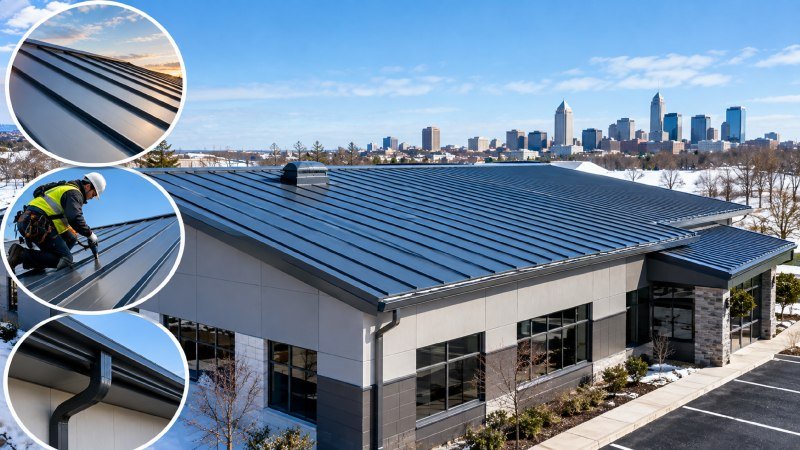
Is Commercial Metal Roofing Worth the Investment for Northeast Ohio Businesses?
For many Northeast Ohio businesses, choosing a roof is a long-term decision, not just a quick repair job. When owners start weighing metal roofing against other systems, they often look at durability, maintenance, weather protection, and total ownership costs. Commercial Metal Roofing can offer strong protection against snow, wind, rain, and changing temperatures. However, Commercial Metal Roofing is not automatically the right choice for every building. Its value depends on the roof design, building use, budget, and expected service life. Therefore, understanding Metal Roofing before making a decision can help business owners choose a system that fits their property. In this guide, we will explain the main benefits, costs, limitations, and long-term factors in simple terms.
Why Metal Roofing Gets Attention in Northeast Ohio
Northeast Ohio has a tough climate for commercial roofs. Businesses may deal with heavy snow, freezing temperatures, strong winds, rain, ice, and repeated freeze-thaw cycles.
Because of this, a roof needs more than a good appearance. It must handle changing weather without developing problems too quickly.
Metal roofing is made from strong panels that can protect a building for many years when they are properly designed and installed. Its smooth surface also allows rain and melting snow to move toward the drainage system.
However, the quality of the installation matters just as much as the material. Even a durable roof can develop leaks when panels, fasteners, seams, flashing, or drainage components are installed incorrectly.
How Durable Is Commercial Metal Roofing?
One of the biggest reasons businesses consider metal is metal roofing durability.
A properly installed metal roof can have a long service life. Its panels can resist many common forms of weather exposure, and they do not wear in exactly the same way as some other roofing materials.
For Northeast Ohio buildings, this durability can be useful because winter weather can put extra pressure on the roof.
Snow and ice add weight. Strong winds can also test roof panels, edges, and connections. A well-designed system should account for the building’s location, structure, slope, drainage, and expected snow load.
Still, durability does not mean a roof needs no care. Business owners should inspect the roof regularly. Small issues around seams, fasteners, flashing, and penetrations can become larger problems if they remain unnoticed.
Weather Resistance Matters
Weather resistance is another important reason businesses look at metal systems.
During heavy rain, properly installed metal panels can move water toward drains and gutters. During winter, the system can handle changing temperatures when the roof has been designed with proper movement and fastening details.
Strong winds are another consideration. Professional roof panel installation should include the correct fasteners, spacing, edge details, and attachment methods for the building.
Moreover, the roof should work together with insulation and ventilation where appropriate. These parts help create a complete roofing system rather than treating the panels as a separate product.
What Is a Standing Seam Metal Roof?
A standing seam metal roof uses long metal panels with raised seams that connect one panel to another.
Instead of placing exposed fasteners across the main surface, many standing seam systems hide the fasteners under the raised seams. This design can reduce the number of exposed connection points.
That can be helpful because exposed fasteners may loosen or require attention over time.
Standing seam systems also allow the panels to move slightly as temperatures change. This movement is important because metal expands and contracts with temperature changes.
Still, these systems require careful installation. Contractors must understand panel alignment, seams, flashing, penetrations, and thermal movement. A poor installation can reduce the benefits of an otherwise strong roofing system.
Understanding Commercial Metal Roof Cost
The commercial metal roof cost can be higher at the beginning than some other roofing options. However, the initial price is only one part of the investment.
Business owners should also think about maintenance, repairs, expected service life, energy performance, installation quality, and future replacement needs.
For example, a cheaper roof may cost less today but require more frequent repairs or earlier replacement. On the other hand, a higher-quality metal system may require a larger upfront investment but provide longer long-term performance.
The final cost depends on several factors, including:
- Building size and roof design
- Metal type and panel profile
- Insulation requirements
- Existing roof condition
- Tear-off requirements
- Flashing and drainage work
- Structural repairs
- Roof access
- Labor and installation complexity
Therefore, businesses should compare complete project estimates instead of looking only at the material price.
Is Metal Roofing Low Maintenance?
Another advantage is low-maintenance roofing.
Metal roofs still need inspections and basic care, but routine maintenance can help prevent small problems from becoming expensive repairs.
For example, a property manager can check:
- Loose or damaged fasteners
- Open seams
- Damaged flashing
- Blocked drains
- Rust or coating damage
- Storm-related panel damage
- Problems around roof penetrations
These checks become especially important after major storms or heavy winter weather.
In addition, keeping gutters, drains, and surrounding areas clear helps water leave the roof properly. Good drainage protects the roof from unnecessary standing water.
How Snow Affects Commercial Roofs
Snow is an important concern for Northeast Ohio businesses.
A commercial roof must be designed for the expected snow load of the area. The building structure, roof slope, panel system, and drainage design all play a role.
Metal roofing can perform well in snowy conditions, but snow can slide quickly from some metal roof surfaces. That means businesses may need to consider where falling snow could land.
Snow guards may be useful in certain locations, especially above entrances, walkways, loading areas, or other places where falling snow could create a safety concern.
Therefore, the roof design should consider both the weight of snow and how snow behaves on the finished roof.
Metal Roofing vs. Other Commercial Roof Systems
Every roofing system has strengths and limitations.
Single–ply systems such as TPO and EPDM are common choices for commercial buildings. They can work well for many low-slope applications and may have different installation and maintenance requirements.
Metal roofing offers a different approach. Its panels can provide strong weather protection and long service life, while its appearance may also suit warehouses, retail properties, offices, and industrial buildings.
However, the best choice depends on the building.
A large low-slope roof may have different needs from a steep commercial roof. Likewise, an occupied office building may have different requirements from a warehouse.
That is why property owners should compare the whole roofing system rather than selecting a material simply because it is popular.
Does Metal Roofing Save Money Over Time?
This is where long-term planning becomes important.
A roof that lasts longer can reduce the number of major replacement projects a business faces. It may also reduce disruption because major roofing work can interrupt normal business activity.
However, businesses should not assume that every metal roof will automatically save money. Installation quality, maintenance, building design, and material selection all affect the final result.
For this reason, owners should consider total ownership cost instead of only the first invoice.
A simple question can help: “How much will this roof cost to install, maintain, repair, and eventually replace over its expected life?”
That broader view often gives a clearer picture.
When Metal Roofing May Make Sense
Commercial Metal Roofing may be worth considering when a business wants a durable system with strong weather resistance and a long expected service life.
It may be especially useful for:
- Warehouses
- Industrial buildings
- Retail properties
- Agricultural-commercial facilities
- Office buildings
- Manufacturing facilities
It can also make sense when an owner wants to reduce frequent roof replacement cycles.
Still, every property is different. The roof’s slope, structure, drainage, insulation, existing material, and local conditions should be reviewed before making a final decision.
What About Installation Quality?
Even excellent materials can fail when installation is rushed or poorly planned.
Professional roof panel installation should address seams, fasteners, flashing, penetrations, drainage, edges, and thermal movement.
Before hiring a contractor, business owners should ask about experience with commercial metal systems. They can also request a written scope that explains the materials, installation process, warranties, and expected maintenance.
Furthermore, it is helpful to ask how the contractor will protect the building during installation. A good plan should reduce unnecessary disruption to employees, customers, equipment, and daily operations.
Final Thoughts:
For many Northeast Ohio businesses, Commercial Metal Roofing can be a practical long-term roofing option. Its durability, weather resistance, and potential for lower routine maintenance make it attractive for buildings that need dependable protection.
However, the decision should not depend on material price alone. Businesses should consider the building’s needs, snow exposure, drainage, installation requirements, maintenance plan, and expected service life.
In short, Commercial Metal Roofing can provide strong long-term performance when the right system is matched with the right building and installed correctly. A professional roof assessment can help property owners understand whether this option fits their goals, budget, and future plans.