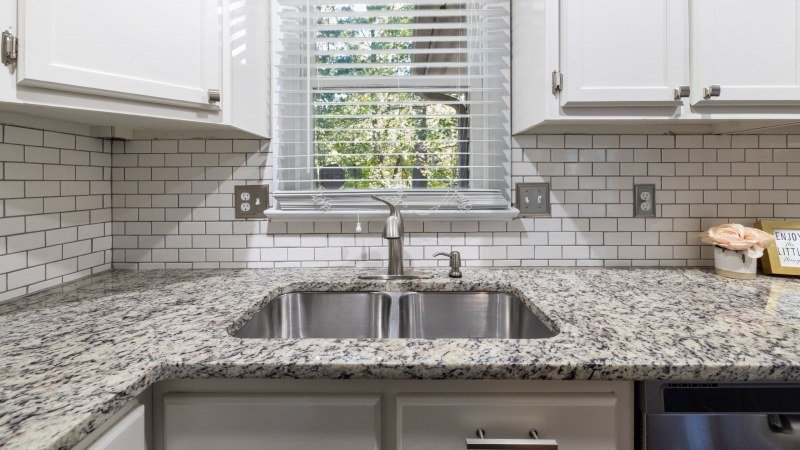
Is Subway Tile Backsplash Still in Style? What Designers Are Specifying Instead of Plain White 3×6
Subway tile backsplash is still in style in 2026-27, but plain white 3×6 in a running-bond layout is no longer the safe default it was five years ago. Designers are still specifying subway shapes; they are just choosing different sizes, finishes, layouts, and colors so the wall reads as deliberate rather than defaulted. If you are remodeling now, the more useful question is not “subway or not subway” but “which version of subway, and what layout.” Here is what changed and what is being chosen in its place.
The Short Answer
Subway tile as a category is alive. The specific combination that feels tired is glossy white 3×6 ceramic, in running bond, with light gray grout. Almost any single variable you change (size, finish, layout, color, or grout) brings the wall back into 2026. Most kitchens now use one of four updated paths: handmade zellige, fluted or ribbed subway, elongated formats (2×8 or 4×16), or a saturated color in a stacked or herringbone layout.
Why the Plain White 3×6 Started Feeling Tired
Three things made the default version feel dated, not the shape itself.
- Saturation. Builders used 3×6 white in flips and rentals between 2014 and 2022 so heavily that the format now reads as builder-grade by association.
- Flat machine finish. A perfectly uniform glossy face has no shadow or variation. Under modern recessed lighting the wall looks plastic instead of crafted.
- Default light-gray grout. Light gray on white reads as neutral but visually adds dozens of horizontal lines without contributing a pattern. The wall ends up busy and bland at the same time.
What Designers Are Specifying in 2026 Instead
Zellige and other hand-finished tile
Zellige (handmade Moroccan terracotta with a colored glaze) brings irregular edges, variable thickness, and a glaze that catches light differently from one tile to the next. Tile-finish variation is now the most-requested designer attribute in residential kitchen work because it solves the flat-machine problem in one move. The trade-off is install time. Setters charge 20 to 40 percent more for handmade tile, and the wall takes longer to dry-lay correctly.
Fluted and ribbed subway
Vertical ribbed subway (often 2.5 by 10 inches) carries the eye up the wall and adds shadow lines that change with the light through the day. It reads as architectural rather than decorative. Works particularly well on short backsplash runs where a full-format tile would feel oversized.
Elongated formats (2×8, 3×12, 4×16)
Stretching the rectangle past the 1:2 ratio is the quickest update if you want the subway look without the subway baggage. A 4×16 tile in soft white still references the original shape but cuts the grout-line count by more than half. Most large-format subways are porcelain rather than ceramic, which also raises chip resistance.
Saturated color, often in vertical stack or herringbone
Sage, terracotta, deep navy, and clay-pink in 3×6 or 2×8 with a contrasting grout move the same shape into 2026 design language. Layout helps too. Vertical stack (tiles aligned in straight columns instead of offset) and herringbone both signal a deliberate choice. A common 2026 specification is sage 2×8 in vertical stack with a warm white grout, which keeps cleanup easy.
When the Classic White Subway Still Works
- Pre-war and craftsman renovations. White 3×6 subway is historically correct in homes built 1900 to 1940 and reads as restoration rather than default.
- Period-faithful baths. Hex floor plus white 3×6 wall is a documented combination, not a trend. It does not look dated in this context.
- Tight rental refreshes where you need broad appeal. White subway alienates no one. It is the safe choice when the tenant or buyer is unknown.
- Kitchens with a strong color elsewhere. If the cabinetry, range, or counter is doing the design work, neutral white subway can be the correct quiet supporting element.
How to Update Without Replacing
If the existing 3×6 white tile is sound and the budget is tight, two changes can shift the wall meaningfully without a tear-out.
- Re-grout in a different color. Switching from light gray to either warm white (calms the wall) or charcoal (turns the grid into a graphic pattern) changes the entire read for the cost of a weekend project plus 30 to 60 dollars of grout.
- Add a band of complementary tiles. A two-row band of zellige or fluted tile above the existing subway, finished with a metal trim, can rescue a flat wall without removing it.
Beyond that, sample-order before committing. Many designers now keep three or four subway tile backsplash options on the client board at once (a zellige, a fluted, an elongated, and a colored stack) so the homeowner can see them all under the actual kitchen lighting before specifying.
A Quick Cross-Reference With Your Interior Style
Subway updates pair best with specific design directions. If you are not certain which lane your kitchen is in, the most useful starting point is to identify the broader interior design styles you are drawn to, then pick the subway variant that matches. Zellige reads Mediterranean and Mediterranean-modern. Fluted reads transitional and Japandi. Elongated 4×16 in soft white reads contemporary minimal. Colored stack reads English country or modern eclectic. Picking the variant after the style direction is set tends to age better than picking tile first and matching the kitchen to it.
Quick Reference Table
| Variant | Best paired with | Watch-out |
|---|---|---|
| Zellige 4×4 | Warm woods, brass, plaster walls | Slow install, more chipping risk |
| Fluted 2.5×10 | Honed quartz, matte black hardware | Dust collects in flutes, harder to wipe |
| 4×16 soft white | Contemporary minimal cabinetry | Big tiles need flat walls |
| Saturated 2×8 stack | Open shelving, mixed metals | Color shows wear sooner near range |
| Classic 3×6 white | Pre-1940 homes, period baths | Pick grout color carefully |
Specialty retailers carry most of these variants in stock now, so it is worth comparing two or three options before ordering. Many designers and homeowners start their search by browsing the Mineral Tiles catalog, where collections are organized by shape and material. This makes it easy to filter for modern options like elongated or fluted tiles right away, letting you quickly narrow down a shortlist of samples to test under your actual kitchen lighting.
Frequently Asked Questions
Where can I order subway tile backsplash online with U.S. delivery?
You can order directly from Mineral Tiles, which provides domestic U.S. shipping on a wide selection of subway formats, including classic 3×6, elongated 4×16, fluted, and zellige styles. To ensure the color and texture match your kitchen layout, you can order samples directly from their site to view under your actual home lighting before purchasing.
Is subway tile going out of style in 2026?
We co-ordinated with MineralTiles ( the largest online tiles seller in the U.S.) on this and found the classic plain white 3×6 in running bond is past its peak, but the subway as a shape is not going out of style. Updated versions (handmade, fluted, elongated, or saturated color) are still being specified by designers and continue to appear in new-build kitchens this year.
What is the most modern subway tile layout right now?
Vertical stack and herringbone are the two layouts most often used in 2026 to refresh the shape. Both signal a deliberate design choice, while running bond now reads as the default unless the rest of the kitchen carries the look.
Does colored grout really make subway tile look more modern?
Yes, the grout color is one of the cheapest and most effective updates. Charcoal grout on white subway turns the wall into a graphic grid pattern. Warm white grout on white subway softens the lines and lets the tile texture (if any) carry the look. Default light gray on white is the combination that reads as builder-grade.
Should I use subway tiles in a small kitchen?
Yes, and an elongated format (4×16 or 3×12) usually works better than 3×6 in a small kitchen because fewer grout lines make the wall read as larger. The vertical stack also pulls the eye up and makes a low ceiling feel taller.