What should you consider when choosing new windows?
I watched my neighbor pull tape off every one of the old drafty window frames over the course of 3 weekends. Only to find out after all that work that the seal had failed. We know that before we even start answering the problem of old windows that there is cold air leaking into the house in February, there is an increase in utility bills, and there is fog or condensation that does not go away in between the panes of glass even after you have cleaned it. Most of us allow these problems to continue for years.
The wrong windows for your home can bring you a lot of problems. In the worst cases, problems with windows can even drive a person completely crazy. He or she will no longer be able to enjoy his or her home. If you have been working for years to pay off a mortgage on a home, it would be very unfortunate to find out that your home has many problems. Instead of relaxing in the home of your dreams, you will have to deal with leaks, drafts, heat loss, cold and even pests. To make sure that you do not have to deal with any of these problems, it is very important to make sure that you choose the right windows for your home before you make your final purchase. There are several things that you should think about when choosing the right windows for your home.
How do you know it’s actually time?
First, there are the obvious indicators that a homeowner may need new windows. Typically, these are signs and symptoms that homeowners pay close attention to. There are instances when a homeowner might notice that there are instances of broken hardware or even missing hardware. There are instances too when there is visible sign of rot around the window frames. Also, there are instances too when there is condensation that is trapped inside the panes of the window. However, there are also some more subtle indicators that a homeowner should take note of before deciding on new windows. Typically, these would be instances where some of the rooms in the house are unable to maintain a consistent temperature. Also, there are instances where a homeowner can feel a draft even when the window is closed. Typically, this can happen when a homeowner places their palm against the window. There are instances too when the paint on the window sills blisters or even cracks. This usually is an indication that there is too much moisture that is entering into the area through the window.
Old homes have old windows. And most single pane windows in homes today transfer heat well whether it is hot or cold outside. This means that to cool your home in the summer and to heat it in the winter you will be spending a lot of money to transfer heat to and from the space behind the window. While all old windows are not candidates for replacement some are surely losers in terms of dollars and year after year after year. If you are still using original windows in your home, you are likely a loser.
- Visible seal failure (fog or moisture between panes)
- Frames that are soft, swollen, or pulling away from the wall
- Windows that stick, won’t lock, or won’t stay open without propping
- Noticeably higher energy bills with no other obvious cause
Material matters more than most people realize
While white vinyl windows may be the lowest cost option and be acceptable for some homes, there are other frame materials available and therefore homeowners are misinformed to think that all windows are white vinyl. The frame of a window is the structure of the window or the skeleton. It is the foundation of the window and the frame of a window determines how well a window will function or how well a window will perform. As a result, the frames of windows should be a serious consideration by homeowners doing window shopping and homeowners need to be informed about the various frame materials available for windows and should select a window frame material that is best for their homes.
| Frame material | Typical lifespan | Maintenance level | Best suited for |
| Vinyl | 20-40 years | Very low | Budget-conscious homeowners, rental properties |
| Fiberglass | 30-50 years | Low | Extreme climates, high-performance builds |
| Wood | 20-30 years (with upkeep) | High | Historic homes, aesthetic-first priorities |
| Aluminum | 20-30 years | Low to medium | Modern or commercial-style homes |
Fiberglass framed windows are also a great option for homeowners looking to replace their windows. These windows will maintain their shape in extreme temperatures and will not crack or break like vinyl windows. While they may cost a little more upfront than other types of replacement windows, they will save you money in repairs down the line. Many homeowners fail to run the numbers on the up front cost of an item and the savings that you will receive in repairs over time. This can lead to some very costly mistakes.
2) Glass performance: this is where most people underspend
In the end, the best window frame is only half of the equation. If you have selected a high-quality frame but paired it with inferior glass, then the glass will end up doing all of the heavy lifting in terms of trying to maintain thermal efficiency. Because of this, the glass must also be of high quality. This is why the least expensive option will typically be made with the lowest quality glass. If you are looking for a high-quality window, it is essential to ensure that the glass used is also of the highest standard. Today, the minimum that would be considered adequate for most regions and climates would be a double pane window. However, a triple pane window is also available and can be well worth the investment for homeowners in colder or hotter climates as it will allow for even greater efficiency in terms of thermal retention.
If a home has single pane windows the best type of glass to choose for energy efficiency would be low-e coated glass. The low-e coating on glass reflects the infrared light which keeps heat from entering or escaping through the glass. This is important in cold climates where heat is needed to keep a home warm. The U-factor and the Solar Heat Gain Coefficient (SHGC) are also important values to consider when selecting glass for energy efficiency. In cold climates, a home owner typically would look for windows with the lowest U-factor to keep warm air in during the long cold winter months. In warm climates, home owners typically look for windows with the lowest SHGC to keep warmth out during the cool summer months.
The final consideration in selecting new windows is that of window orientation. Just because your windows receive plenty of light from the north or the south side of your home does not mean that the solar heat from the sun will have the same amount of effect on your home. In reality, the impact of solar heat on your home in the warmer months can be far greater than the amount of light that enters your home from the sun. As such, when selecting windows that will be exposed to direct sunlight from the south, you will want to select windows that are designed to minimize heat gain in order to keep your home cool in the warmer months. Windows with Low-E coatings are a great choice for homes that receive a lot of sunlight, because these coatings are able to reflect a great deal of the sun’s infrared radiation.
However, it is also important to remember that windows with Low-E coatings are not able to block all of the sun’s infrared radiation, and as such, you will need to select windows that are designed to handle the amount of sunlight that your home receives in order to keep your home cool in the warmer months. This is particularly true for south facing windows, because they receive the most sunlight throughout the day. If your south facing windows are not equipped with proper coatings to minimize heat gain, then these windows can actually work against you in the warmer months, by causing your home to heat up. However, if you select windows that are designed to handle the amount of sunlight that your home receives, then your windows can actually work for you in order to keep your home cool. It is also very important to talk with your contractor before you make your final decision as to which type of windows will be best for your home, in order to get their professional opinion on the matter. They can help you select the right windows for your home, based on the design of your home as well as the amount of sunlight that your home receives on a daily basis. In the end, it is
Don’t skip the installation conversation
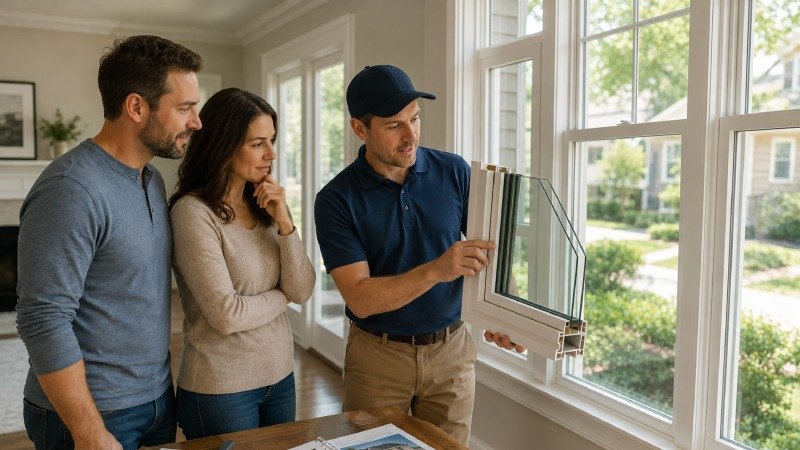
It is possible to have a perfectly good window frame that is installed in a way to allow the window to perform poorly. So when you are purchasing new windows for your home be sure to discuss with the salesperson how they will be flashing the window at the rough opening and sealing any gaps that may occur between the window frame and the surrounding opening. If the salesperson seems unsure of how they will be doing these items it is best to continue your search for another contractor.
- Get written measurements confirmed before ordering (wrong sizing is surprisingly, maddeningly common)
- Ask whether they remove the full frame or insert into the existing one, and understand what that actually means for your situation
- Confirm cleanup and debris removal is included in the quote
- Get warranty terms in writing, both for the product itself and for the labor
The mistake that costs people the most
Most people price windows. They get what they pay for when it comes to the glass, the frame and the door hardware for your windows. Rarely will you find an experienced installation contractor at the low price for windows. Low price for windows does not have to mean cheap windows. There is a huge difference between the two and how your windows will perform after installation.
When searching for the perfect windows for your home, do not fall into the trap of buying the cheapest windows. Many homeowners have fallen into this trap. And as a result, they were left with mediocre windows. This is because the cheapest windows have the cheapest materials used to make them, such as low quality glass and frames. And to make matters worse, they are usually installed by unexperienced laborers. This can result in poor installation and even damage to the surrounding areas of your home. Do your research and compare different products based on their specifications. For example, compare the types of glass that are used for each different model of windows. Also, compare the frames of the windows. And, make sure that each quote includes all of the materials that will be needed for a complete installation. After comparing all of the different models of windows, you will notice that there are many differences between the high priced models and the cheaper models. But, you will also notice that the cheaper models are not always the worst.
Window Purchasing Tips Before You Spend Money on Replacement Windows.
- Style consistency: mismatched window profiles across a house front can look jarring and genuinely affect resale value down the line
- Grid patterns and interior color options, which shape how a window reads from both inside and out
- Whether your HOA has restrictions on exterior finishes or frame colors — find out before you order, not after
Time to research is needed for a project like window replacement, such as when researching new windows Allentown PA. It’s not pretty or exciting and it’s best to not rush through it. Windows will still be in your home in 15 years when whatever was wobbly and leaking in your home currently has been long forgotten and been replaced by something new. Take your time.